








- Newborn screening
The Pediatric Department of the Hospital Jihlava sends newborn laboratory screening to specialized laboratories:
Metabolic defects:- General University Hospital Prague.
- Institute of Hereditary Metabolic Disorders.
- Newborn Screening Lab.
- U Nemocnice 2, Praha 2.
Sampling at SKH, CAH:- FN Brno.
- Workplace DM, OKB.
- Černopolní 9, Brno.
HERE you can read the informed consent of the legal guardian for the newborn laboratory screening sampling.

- Neonatal department
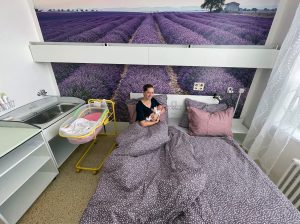
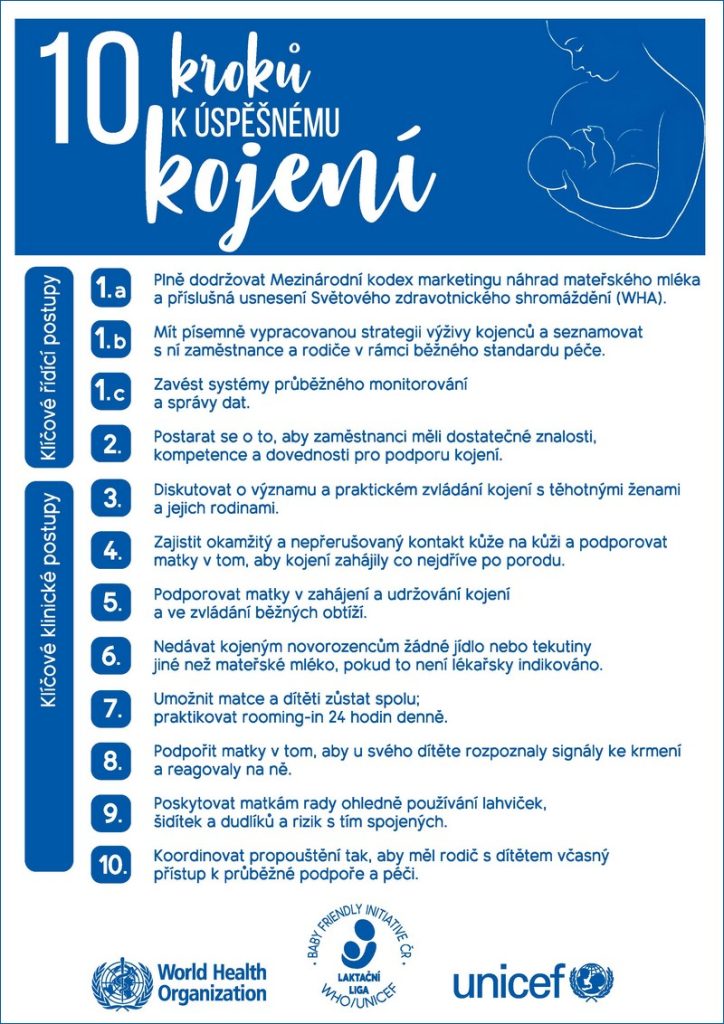
The Neonatal Department of Jihlava Hospital provides comprehensive care for healthy newborns born in the Jihlava maternity ward. Our aim is to support breastfeeding and to have as many fully breastfed babies as possible at discharge. Rooming-in is provided in all rooms. Mothers are in continuous contact with their babies from birth until discharge, even after a caesarean section.
In case of a physiological delivery, your baby will be immediately placed on your abdomen, marked with a bracelet and the umbilical cord will be cut. Depending on the baby's condition and mutual agreement, the baby will be taken care of on the changing table in mother's presence. The umbilical stump is treated, the baby is weighed, length, body temperature is taken and the head and chest circumferences are measured. Bonding on the mother's body and attachment to the breast is performed then. During bonding, we monitor all vital signs of a baby using a saturation probe attached to the baby's leg. Within 24 hours after the delivery, the baby will be examined by a pediatrician.
The postnatal bathing takes place at the same time as the bathing demonstration in 6 - 24 hours directly in the room of the six-week ward. Only in indicated cases, the 1st bath takes place in the delivery room.Most of the nurses in the neonatal unit also work as lactation consultants who can help and advise you on breastfeeding and baby care. The ward has a Lactation Clinic which is also available to mothers after their discharge from the hospital.
During your baby's stay in the neonatal unit, we carry out screening examinations to perform the early detection of serious diseases in babies.This screening is regulated by the Czech legislation and are covered by the general health insurance.
Newborn laboratory screening for congenital and hereditary diseases
The newbon's blood drop is taken within 48 to 72 hours after the delivery.
Objective: the early detection of serious diseases that cannot be detected any other way. Early detection allows treatment to be initiated immediately and so it prevents a child's permanent disability.
The best-known monitored diseases include congenital hypothyroidism (reduced thyroid function), phenylketonuria (a serious metabolic defect that threatens the neurodevelopment), congenital adrenal hyperplasia (congenital lack of adrenal function) and cystic fibrosis, SMA and SCID.
For more information see: www.novorozeneckyscreening.czUltrasound of the kidneys
Objective: to determine whether the kidneys of the baby are properly formed - their length, shape, location, cupping system are checked and also if their emptying is normal.
It is performed by a paediatrician in the room in the mother's presence on the 2nd day after the delivery.Orthopaedic hip check-up
Objective: early detection of a hip development disorder, which can occur in 3-5% of the population. Early treatment and monitoring can prevent severe hip damage with permanent consequences.
The check-up is carried out by an orthopaedist in the room in the presence of the mother and includes a clinical check-up of the hip joints and a preventive examination of the hip joints by ultrasound. The check-up includes a comprehensive clinical examination of the large-joint mobility.Screening for congenital lens cataract
Objective: early detection of cataracts leads to early treatment.
It is performed by the pediatrician in the room in the presence of the mother during the morning rounds, the ophthalmoscope is used to make the red reflex in both eyes.Screening of hearing
Objective: early detection of congenital hearing loss in children and provision of the preventive follow-up care, mainly the delayed development of the communication skills in children can be prevented.
A basic hearing test can be performed on the 2nd day after the delivery. It is a simple, painless examination. The baby receives a soft measuring probe in the ear canal, the machine sends a weak sound stimulus and records the responses of the auditory system. The child is asleep or awake during the examination.The discharge of the baby to the home care is planned after all medical, legal and social conditions are met, i.e. all screening tests are performed, the baby is healthy without jaundice, the mother is managing the care and nutrition of the baby and the baby is thriving. According to the recommendations of the Czech Society of Neonatology, the discharge is possible after 72 hours. It is important to arrange in time for a district paediatrician to take over the care of the child.
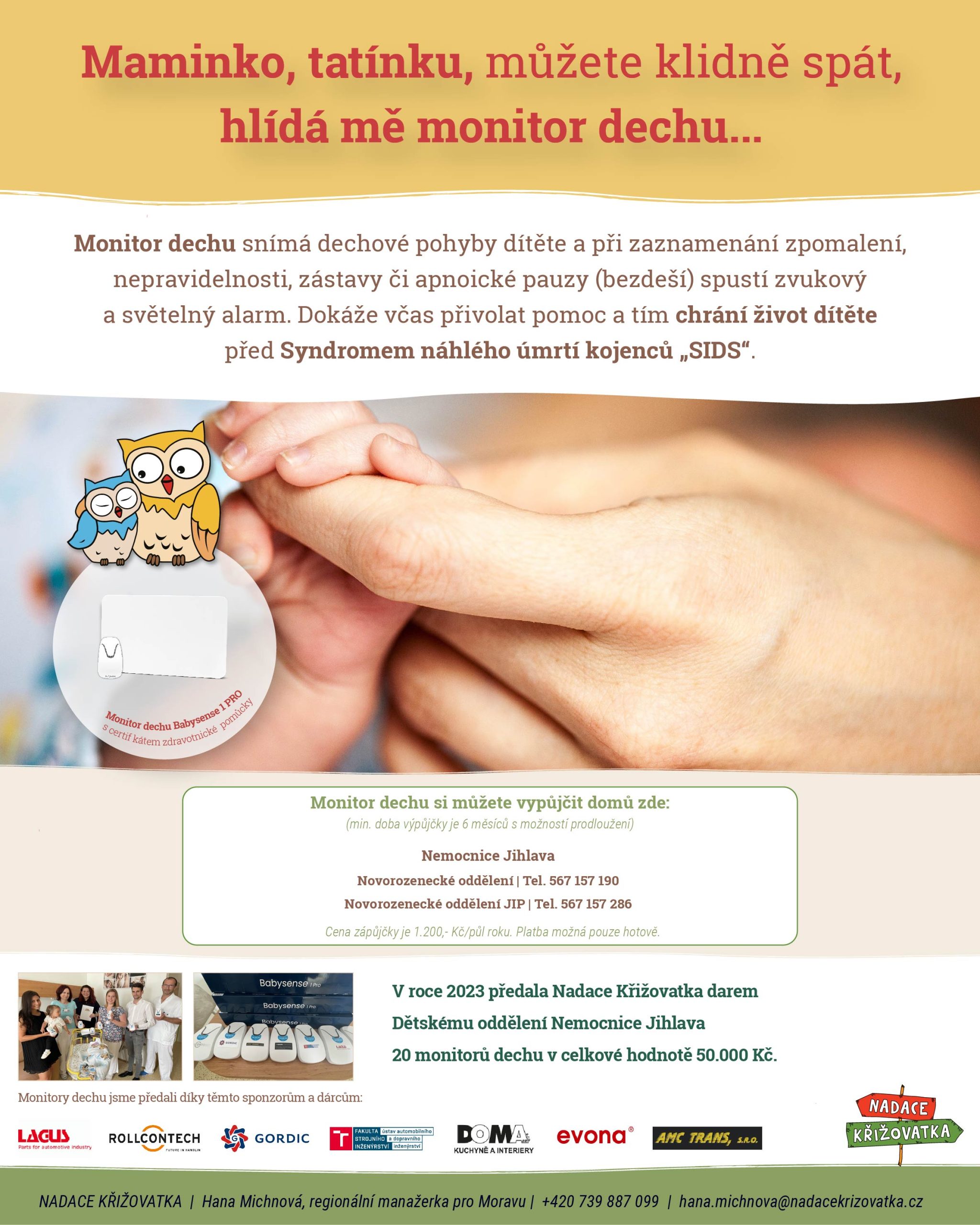
It is possible to rent a monitor of baby's breating (Baby Sense). In cooperation with the Křižovatka Foundation the fee is 1200 CZK for 6 months.
Our goal is a happy mother and a happy baby.
- House Rules for children up to six years of age
Dear parents, dear children,
the instructions given in these house rules are intended to help you with the basic orientation in our department. Being in hospital is not a pleasant experience for anyone. We will do our best to provide you with the best possible care, make your stay as pleasant as possible, and help you to recover and return to your home.
Child admission to the ward
Admission takes place in the outpatient clinic on the ground floor of this building. It is necessary to have a health insurance card, for persons over 15 years of age an ID card and a referral from the referring doctor. Your child's first examination takes place in the outpatient clinic, after which a paediatric nurse will escort you to the ward and then to your room. She will explain the operation of the ward to you. You will store your clothes, shoes and clothing in the wardrobe in your room. Do not take valuables or large amounts of money with you. Earrings that cannot be unfastened will be left for your child to sign for. If your child is taking any medication or wearing glasses, give them to the ward nurses as soon as possible. You may keep your child's own pyjamas, if you do not have them with you, your child will be given our pyjamas, bring home shoes and toiletries. A favourite toy will certainly make the child's stay here more pleasant.
Parent accompaniment
We admit parents, grandparents and close relatives as escorts. The doctor will issue a sick leave to the employed, which will be terminated upon dismissal. It is necessary to have the following equipment with you: home clothes and shoes, pyjamas, towel, toiletries, medicines- if you are taking any.
The buffet and newspaper stand are on the ground floor of the pavilion in the connecting corridor.
If you go outside the ward, always inform the nurse. The child cannot be left alone in the room unsupervised. Use visiting hours to do shopping while another family member can wait with the child.
All areas of the hospital are no smoking.
Daily schedule
06:30 - scheduled samplings.
07:15 - morning toilet - individual.
07:30 – breakfast.
07:50 - administration of medication.
08:00 - small ward-round.
09:15 – snack (children up to 3 years of age)
10:00 - grand ward-round (Mon, Wed, Fri).
13:50 - administration of medication.
11:30 – lunch.
12:30 – measuring body temperature.
During the morning, various examinations and treatments of the child ordered by the doctor take place.
14:00 – toddlers' snack.
14:00 – administration of medication.
17:15 – dinner.
19:45 – administration of medication, putting children to bed.
19:50 – administration of medication.
Strava
The diet is determined by the doctor according to the nature of the illness and the child's condition. We deliver the individual meal portions to the room at the times stated. If you wish to give your child fruit, drinks or other food, please consult a doctor in the child's interest. A fridge is available for accompanying persons, where you can store your food.
Diarrhoeal diseases
For children admitted with diarrhoeal illness, a special regime must be observed. You will be informed in detail about the stricter hygiene regime when your child is admitted to the ward.
Visits
Visits are daily. Please take turns during visits so that there are no more than two visitors with one child. Walks within the hospital grounds are permitted by the head of the department or the attending physician. We can lend you a pram for walks. Report leaving the ward to the nurse.
Information
Detailed information on the child's state of health is provided in person by the attending physician during working hours. Outside working hours (ÚPS), the doctor on duty (15:30 – 7:00) will provide only basic information.
Discharge
During the main ward round, the head of the department will decide whether your child will be discharged. You will receive information on further treatment and the discharge report from the attending physician.
Comments
You may raise comments or complaints with the head of the department at any time. They are usually caused by a misunderstanding or a misinterpretation of the situation. Believe us, much can be resolved by talking it through together.
We wish for mutual cooperation and your satisfaction throughout your stay at the Paediatric Department.
- House rules for children aged six and over
Dear parents, dear children,
the instructions in these house rules are intended to help you find your way around our department. A stay in hospital is not pleasant for anyone. We will strive to provide the best possible care, make your stay more pleasant, and ensure a speedy recovery and return home.
Child admission to the ward
Admission takes place at the outpatient clinic on the ground floor of Building G. You must bring your health insurance card, an identity card for persons over 15 years of age, and a referral from the referring doctor.
During the first examination at the outpatient clinic and the subsequent completion of the documentation, parents may stay with the child to support them. The admitting nurse will then take you to the room, where you will be familiarised with how the ward operates. Put clothes and footwear in the wardrobe in the room; it is better not to bring valuables or larger sums of money. Earrings that cannot be unfastened will be left on the child against signature. If the child takes any medication or wears glasses, hand them over to the nurses on the ward as soon as possible. The child may keep their own pyjamas; if you do not have them with you, the child will be given hospital ones. Please bring indoor footwear and toiletries; for hygiene reasons we use only paper tissues.
A favourite toy will certainly make the child's stay in hospital more pleasant.
Parent accompaniment
We admit parents, grandparents and the closest relatives to the ward as accompanying persons. Due to the number of beds, we admit parents with children under 6 years of age or with those who cope less well with a hospital stay. For children over 6 years of age, the accompanying person pays CZK 200 per day.
For employed persons, the doctor will issue a sick note, which they will end on discharge. You must bring with you: indoor clothing and footwear, pyjamas, a towel, toiletries, and medication – if you take any.
The buffet and newspaper stand are on the ground floor of the pavilion in the connecting corridor.
If you leave the ward, always inform the nurse. The child cannot be left alone in the room unattended. Use visiting hours for shopping, when another family member can stay with the child.
Smoking is prohibited in all areas.
Daily schedule
06:30 – waking patients, measuring body temperature, morning hygiene.
07:15 – breakfast.
07:45 – short ward round.
08:00 – administration of medication.
10:15 – main ward round (Monday, Wednesday, Friday)
11:15 – lunch.
12:00 – administration of medication, measuring body temperature.
During the morning, various examinations and treatments of the child ordered by the doctor take place.
14:00 – administration of medication.
17:15 – dinner.
19:00 – measuring body temperature.
20:00 – administration of medication, putting children to bed.
21:00 – 6:00 – night-time quiet hours.
In the mornings, the children are looked after by a nursery school teacher and a primary school educator. The children are given tasks appropriate to their age and state of health. A playroom is also available for the young patients. Here the children are offered a range of art and craft activities. They can also watch TV and videos, read books and play various board games. Children who cannot come to the playroom are lent games and toys directly in their room.
Strava
The diet is determined by the doctor according to the nature of the illness and the child's condition. If you wish to give your child fruit, drinks or other food, please consult a doctor or nurse in the child's interest. You may ask the nurse to store food in the fridge and, of course, to hand it out to you at any time. Food is labelled with the child's name tag.
Visits
Visits are daily. Please take turns during visits so that there are no more than two visitors with one child.
Walks within the hospital grounds are permitted by the head of the department or the attending physician.
Report leaving the ward to the nurse.
Information
Detailed information on the child's state of health is provided in person by the attending physician during working hours. Outside working hours (ÚPS), the doctor on duty (15:30 – 7:00) will provide only basic information.
Discharge
During the main ward round, the head of the department will decide whether your child will be discharged. You will receive information on further treatment and the discharge report from the attending physician.
Comments
You may raise comments or complaints with the head of the department at any time. They are usually caused by a misunderstanding or a misinterpretation of the situation. Believe us, much can be resolved by talking it through together.
We wish for mutual cooperation and your satisfaction throughout your stay at the Paediatric Department.
- Neonatal ICU house rules
Dear Parents,
the instructions in these rules are intended to help you find your way around our department.
Your child's state of health requires treatment in the intensive care unit. If their condition improves, they will be treated in the neonatal ward. A stay in hospital is not pleasant for anyone. We will strive to provide the best possible care, make your stay more pleasant, and ensure a speedy recovery and return home.
Child admission to the ward
Your child is transferred from the delivery room to the neonatal ICU in a transport incubator immediately after birth. The newborn is placed in an incubator or on a heated bed, connected to a monitor, and urgent care is started according to their state of health. The parents are informed as soon as the child's condition has been stabilised.
Please bring disposable nappies and wet wipes for your baby in the neonatal ICU; you may also bring your own washable toy.
Mother accompanying the child
The mother may be admitted to the neonatal ICU as soon as her state of health allows and she has been discharged from the care of the gynaecologists.
The treatment of premature and sick newborns requires a longer period of treatment, weeks or even months.
This period is psychologically very demanding for parents, and especially for mothers. For this reason, an individual approach to admitting the mother to the ward is possible, always by arrangement with the attending physician.
The mother must bring the following items with her: indoor clothing and footwear, pyjamas, a towel, toiletries, and medication – if she takes any.
Leaving the ward is permitted only in exceptional cases (pharmacy, check-up at another outpatient clinic, etc.).
When leaving, always put on a white gown, which you discard into the designated bag in the airlock on your return.
Report every departure from the ward to a nurse. Smoking is prohibited in all areas!
The buffet and newspaper stand are on the ground floor of the pavilion in the connecting corridor.
Strava
The mother's diet is determined by the doctor according to her state of health.
Visits
Visits to the intensive part of the ICU are allowed all day, and only for the child's parents.
Other relatives or acquaintances may also visit the mothers' rooms, but always only two persons over 10 years of age.
A stay in the intensive care unit requires compliance with a special regime.
Always disinfect your hands when entering the airlock; you may then enter the ward.
If your child is in isolation, always put on a new disposable protective gown after disinfecting your hands and before entering the room. When leaving, discard the protective gown into the designated bag while still in the room.
Information
Detailed information on the child's state of health is provided in person by the attending physician during working hours. Outside working hours (ÚPS – doctor on duty from 15.30 to 7.00), the doctor on duty will provide only basic information.
Comments
You may raise comments or complaints with the head of the department at any time. They are usually caused by a misunderstanding or a misinterpretation of the situation.
Believe us, much can be resolved by talking it through together.
We wish for mutual cooperation and your satisfaction throughout your stay at the Paediatric Department.
- ICU house rules
Dear parents, dear children,
the instructions in these rules are intended to help you find your way around our department. Your child's state of health requires treatment in the intensive care unit. If their condition improves, they will be treated in the standard ward. A stay in hospital is not pleasant for anyone. We will strive to provide the best possible care, make your stay more pleasant, and ensure a speedy recovery and return home.
Child admission to the ward
On admission, you must present the health insurance card and, for persons over 15, an identity card. Do not bring valuables or larger sums of money. Earrings that cannot be unfastened will be left on the child against a signature. If your child takes any medication or wears glasses, hand them over to the nurses as soon as possible. The child will be given hospital pyjamas; please bring indoor shoes and toiletries. For hygiene reasons, we only use paper tissues. A favourite toy or book will certainly make your child's stay here more pleasant.
Parent accompaniment
We will allow parents to accompany the child depending on the child's state of health. We admit parents, grandparents or, where applicable, the closest relatives to the ward as accompanying persons. For children over 6 years of age, the accompanying person pays CZK 200 per day. For employed persons, the doctor will issue a sick note, which they will end on discharge. Accommodation and meals will be provided to you in the standard ward. You must bring the following items with you: indoor clothing and footwear, pyjamas, a towel, toiletries, and medication – if you take any.
You will come to see your child during the day; if necessary, we will call you at night as well. If the child is asleep, you may go to the ward where you are accommodated.
A stay in the intensive care unit requires compliance with a special regime. Always disinfect your hands when entering the airlock; you may then enter the ward. If your child is in isolation, always put on a new disposable protective gown after disinfecting your hands and before entering the room. When leaving, discard the protective gown into the designated bag while still in the room.
The buffet and newspaper stand are on the ground floor of the pavilion in the connecting corridor.
Always report every departure from the ward to the nurse. In all areas there is no smoking.
Strava
The diet is determined by the doctor according to the child's state of health and age.
If you wish to give your child fruit, drinks or other food, please consult a doctor in the child's interest.
Visits
Visits are daily and only for the child's parents; other family members may visit exceptionally by arrangement with the attending physician. Always disinfect your hands when entering the ICU airlock.
Information
Detailed information on the child's state of health is provided in person by the attending physician during working hours. Outside working hours (ÚPS), the doctor on duty will provide only basic information.
Comments
You may raise comments or complaints with the head of the department at any time. They are usually caused by a misunderstanding or a misinterpretation of the situation. Believe us, much can be resolved by talking it through together.
We wish for mutual cooperation and your satisfaction throughout your stay at the Paediatric Department.
- Lactation counselling
The lactation clinic can be found on the 6th floor of Block G, right next to puerperium ward.
Its aim is to instruct on possible problems or uncertainties with breastfeeding and nutrition of the newborn baby.
Mothers can make an appointment by phone: +420 567 157 594
The lactation consultant will work with you until you achieve the desired result.

Bc. Eva Aldorfová
Lactation consultant
A visit to the clinic takes about an hour. Older children can have fun in the children's corner while you are consulted.
In emergency, you can contact the lactation consultant of the children's department. This counselling service is open 24 hours a day. 567 157 718

- Information leaflet for mothers on discharge of a newborn
When is the right time to discharge a newborn from the maternity ward of Jihlava Hospital?
Nowadays, the discharge of every newborn from the maternity hospital must be planned so that all medical, legal and social conditions are met. At present, newborns can be discharged no earlier than 72 hours after birth for the following reasons:
After all the screening examinations in newborns have been performed, which include:
- Blood sampling for the so-called screening test.
- SONO ledvin.
- Hip ultrasound.
- Hearing test.
- Eye examination – red reflex.
All examinations are described in detail in the information leaflet entitled NEWBORN SCREENING EXAMINATIONS.
A newborn can only be discharged home once, after the post-birth weight loss, the baby's weight curve starts to rise and the baby is gaining weight. In mothers, lactation usually starts on the 3rd–4th day after birth; for this reason, it is necessary to gain breastfeeding experience from trained and experienced staff in the maternity ward.
The umbilical stump is left in place and will separate (fall off) by itself within two weeks.
Neonatal jaundice requires monitoring and treatment. The length of monitoring and treatment depends on the newborn's condition and the amount of bilirubin in the baby's blood.
A significant change is the abolition of tuberculosis vaccination; newborns are not vaccinated in the maternity ward.
What should a mother know when her baby is discharged from the maternity ward?
- On discharge by the paediatrician, you will receive a newborn discharge report, containing complete information on the course of the birth, postnatal adaptation, medication given and all examinations concerning your baby. Hand over the discharge report and the completed TB questionnaire to your paediatric GP at their first visit to the child.
- On the day of discharge from the maternity ward (if it falls on a weekend or public holiday, then on the first working day after discharge), inform your paediatric GP. It is enough to contact the doctor you have chosen by telephone and inform them that your baby has been discharged into home care. The paediatric GP will visit you at home within three days of discharge. We recommend writing down and preparing any uncertainties or questions that arise during these three days. The paediatrician will gladly answer them at the first visit.
Within 8 days of birth, every baby must have a birth certificate issued and be registered with a health insurance company.
Birth certificate: for your child's birth certificate, go to the Jihlava City Council (Magistrát města Jihlavy), Population Register Department, Masarykovo náměstí 1; you must present the identity cards of both parents, the marriage certificate and, where applicable, the agreement on the child's name (telephone: 567167243).
Insurance: registration depends on your place of residence; to insure your child, you must present the child's birth certificate (telephone VZP Jihlava: 567 129 203).
Breastfeeding
For every baby, breast milk is the most optimal form of nutrition. Breast milk is a source of all the essential nutrients and, unlike artificial formula, it is the only one that contains antibodies, which are important in protecting against infection. In the long term, breast milk is the only effective way of preventing the early onset of allergic diseases such as atopic eczema, asthma or hay fever. We must not forget that the length of exclusive breastfeeding protects the child from the early introduction of cow's milk protein, which has a major influence on the incidence of DM (diabetes) in childhood.
In terms of the length of breastfeeding, it is ideal for the baby to be exclusively breastfed (i.e. without any supplements) until the end of the 6th month of age; breastfeeding should then continue at least until the child is one year old, but with other non-dairy complementary foods.
What you have learnt during your stay in the maternity ward
- Correct positioning of the baby at the breast.
- Breastfeeding on demand – after returning home from the maternity ward, the baby is hungry more often and wakes up at shorter intervals. Gradually, the intervals between feeds may become longer. Even so, the baby should be breastfed at least 8 times a day. This also applies if the baby has a longer night-time break; breastfeeding must then be more frequent during the day.
- If you are not sure whether your baby is hungry, it is advisable to arrange a check-up and test weighing with your paediatric GP (the paediatric nurse will weigh your baby before and after a feed to determine the exact amount of breast milk consumed).
- Do not always take your baby's crying as a sign of hunger. Most often the baby has problems with wind, a wet nappy, or simply needs more attention or a cuddle.
- For the baby to learn to suckle well, it is essential not to give them a dummy for soothing, as this confuses the baby and suppresses their natural sucking reflex.
- While breastfeeding, avoid spicy, irritating and bloating foods, and also leave out foods that may cause an allergy in your baby through breast milk (e.g. citrus fruit, kiwi, strawberries, peppers, all berries, celery and, in larger amounts, cow's milk).
What are you most often interested in?
- If your exclusively breastfed baby is thriving, content and gaining weight, their stools may be very variable. An exclusively breastfed baby may pass stools 10 to 12 times a day, of a squirting consistency, but also once a week. Just watch that the stool does not contain blood or bloody mucus and is not spinach-green to black in colour – in that case, contact your GP immediately. Spitting up after feeds is common in the newborn period, but if your baby starts vomiting larger amounts of breast milk, see your paediatric GP.
- The umbilical stump is left in place on discharge from hospital; it gradually dries out and falls off by itself within two weeks. After it falls off, we use umbilical alcohol, purchased at a pharmacy, to care for the newborn's navel.
- For your baby's hygiene, use only products intended for newborn care. Bathing the newborn with soap or baby bath products is not recommended daily; however, it is important to check your baby every day and wipe the skin folds (under the neck, armpits, groin, genitals and bottom) with clean water.
- Change your baby's position at regular intervals to prevent a flattened head, but under no circumstances may you leave the baby alone lying on their tummy; newborns and infants are at risk of sudden infant death syndrome.
- To wash your baby's clothes, use only washing powders intended for children; for sensitive skin it is advisable to add several rinse cycles. Do not use fabric softener for children.
- Children's walks depend on the weather, the season and their state of health. As a general rule, children must not go out for walks if their weight has not reached 3000 g, nor in the winter months if the temperature is below –5 °C. Other children stay at home for the first 2 days; on the 3rd day they acclimatise, properly dressed, in an aired room or by an open window, and on the 4th day they can go out for a short walk for the first time
- To prepare any drinks for children under one year of age, use exclusively water intended for infants.
The staff of the Paediatric Department of Jihlava Hospital wish you pleasant and happy moments.
- Informace pro pacienty s diabetem
For children with diabetes we have a specialised outpatient clinic, which is open every Wednesday. Opening hours and contacts can be found in the “opening hours” section.
Every summer we organise camps for children.
SPORT in children with diabetes
is the title of a new educational brochure published by the Association of Parents and Friends of Diabetic Children in the Czech Republic.
The author is MUDr. Jaroslav Škvor. Co-authors: Doc. MUDr. Marta Šnajderová, CSc., MUDr. M. Svojsík.
The brochure contains a general part, which provides summary information on physical activity and the physiology of physical exertion, and includes practical notes on what happens during physical activity, on monitoring, and on everyday activities and training.
The second part – the specific part – focuses precisely on sport – which, how much and how. It covers various types of sporting activities, including – running, swimming, cycling, cross-country skiing, ball games, kickboxing, golf, diving and tennis.
Very interesting is the appendix, which offers some views and experiences of children, adolescents and young adults with diabetes and sport.
„Grown-up children“ from our paediatric diabetes clinic also describe their experiences here.
If you are interested, contact the Association of Parents and Friends of Diabetic Children.
Associations and foundations that may be helpful to patients with diabetes
Dětský diabetes (detskydiabetes.cz)
This website is run by staff of the Paediatric Diabetes Centre of the Department of Paediatrics, Second Faculty of Medicine, Charles University and Motol University Hospital, in cooperation with the Paediatric Diabetology Working Group of the Czech Diabetes Society ČLS JEP.
RIAPS Crisis Helpline
Tel.: 222 580 697 NONSTOP
Crisis Intervention Centre Helpline
Tel.: 284 016 666 nonstop
Senior telefon
Tel.: 222 221 771 nonstop
Linka psychopomoci
Tel.: 224 214 214 for the whole Czech Republic
Vialinka on erectile dysfunction
Tel.: 283 004 444
(Mon – Fri 4 – 8 p.m., doctor on the phone Wed 6 – 8 p.m.)
Union of Diabetics of the Czech Republic (Svaz diabetiků ČR)
Koperníkova 11, Praha 2, PSČ 120 00Tel.:224 142 634
- Accompanying programmes for patients
WE READ TO CHILDREN
At our Paediatric Department, an auntie or uncle comes to read to the hospitalised children. The reading takes place as part of the nationwide awareness campaign All of Czechia Reads to Children (Celé Česko čte dětem). The reading can be for several children at once, or for individuals, going from room to room. Apart from books, the aunties and uncles also have puppets and other aids to help distract the children. Reading does not last longer than twenty minutes. That is the limit at which children lose attention.
HEALTH CLOWN
Every Tuesday afternoon, the children in Jihlava Hospital are visited by a Health Clown. Doctor Traktor, Doctor Bohdan Bláha and Nurse Anastázie Neškodná are witty and entertaining and can distract both little patients and seventeen-year-old boys and girls.
NEBOJTE SE NEMOCNICE
Course content:- Introducing nursery school children to the hospital environment and preparing the child for contact with a healthcare facility.
- Through play, they will become familiar with the procedures, interventions and examinations that await them if they fall ill.
- They will try out and handle the instruments used to examine children.
- They will play at being a doctor or a nurse and examine a patient.
- They will learn which things they must and which they may take with them to Jihlava Hospital.
- They will look around the Paediatric Department of Jihlava Hospital – the admission outpatient clinic, the examination room, the children's rooms, the nursery school at Jihlava Hospital and the children's playroom.
- At the end of the programme, we prepare a small competition with prizes for the children to obtain feedback.
Staffing:
- General nurse specialising in paediatric nursing.
- A teacher from the nursery or primary school at Jihlava Hospital.
Where the educational course takes place: the large meeting room of Jihlava Hospital.
Course duration: 9:00 – 11:30.
When: twice a month, dates by telephone arrangement, a maximum of 12 children per course.
Contact: Head Nurse of the Paediatric Department, Bc. Jana Zejdová, tel. +420777233031.
Paediatric Department
